What a crate is for (and what it isn’t)
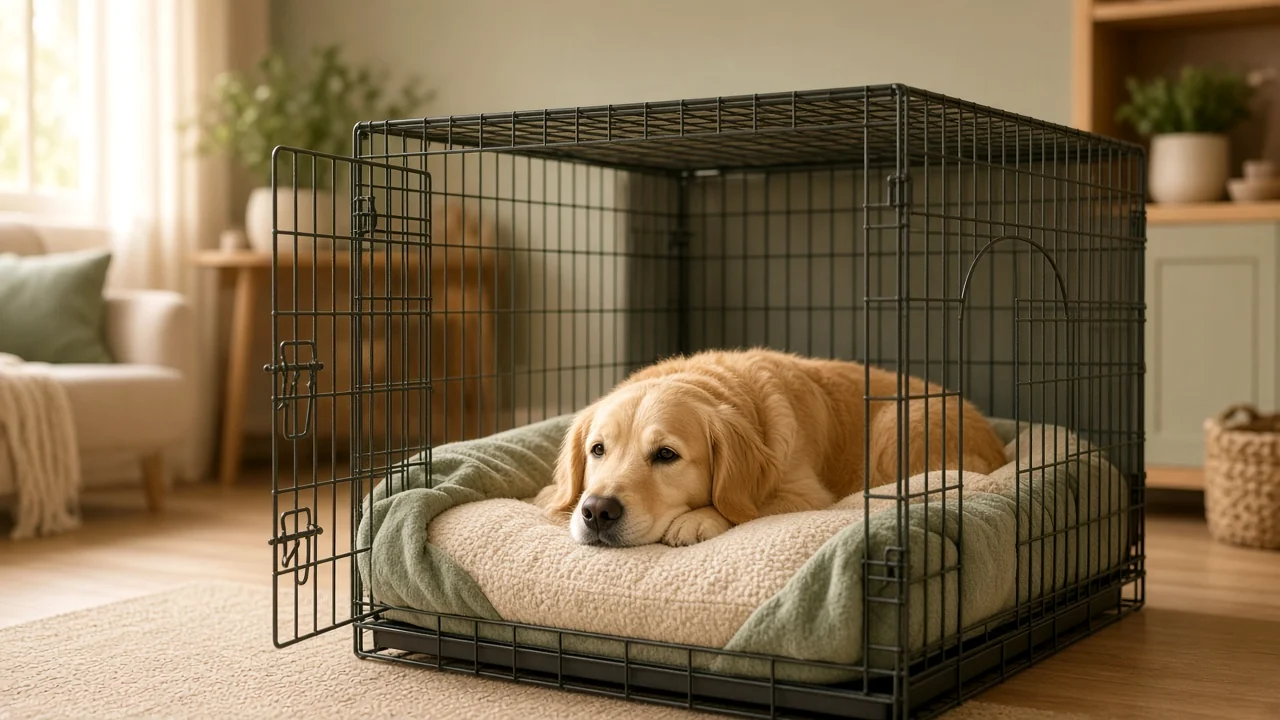
A crate can be a calm place to rest, a safer way to travel, and a short-term help while you house-train or keep a puppy out of trouble. It is not a place to leave a dog all day with no breaks. It is not punishment. If the crate only shows up when you leave or when someone is upset, your dog will learn to fear it.
You can raise a great dog without a crate. You can also use a crate in a kind way. If a crate is not a good fit, switch to a pen or a safe room — no guilt.
Quick sizing tips
- Your dog should stand without ducking, turn around, and lie on their side.
- A crate that is too big can make potty training harder for some puppies — use a divider if you have one.
- Measure height at the shoulders and length from nose to the base of the tail. Check the size chart, not just the product photo.
- Wire, plastic, and soft-sided crates all work in different homes. Soft-sided crates are best for calm travelers, not dogs who chew hard when upset.
Optional: browse crate sizes
Compare sizes and dividers yourself. Amazon Associates search (we may earn a commission):
- Dog crate with divider — Amazon search — useful starting point for growing pups
First week — day by day
Go slower if your dog is scared or new to your home. The day labels are a rough guide, not a rule. Always take them out to potty before longer closed-door practice.
| Day | Focus | Success looks like |
|---|---|---|
| 1–2 | Keep the door open. Toss treats in. Feed meals near or inside. Do not close the door yet unless they walk in on their own. | They go in willingly, look relaxed, and explore without being pushed |
| 3 | Close the door for 3–10 seconds while you sit nearby, then open and give a treat. Do many short rounds. | They stay calm (or at least okay) when the latch clicks |
| 4 | Work up to 30–60 seconds with a chew or stuffed toy. Stay where they can see you. | They settle. They are not screaming from the first second |
| 5 | Step out of sight for a few seconds. Come back before they panic. Keep hellos quiet — no big party. | You can leave and come back without a full meltdown |
| 6–7 | Try short real-life moments: a shower, taking out trash, a quick porch trip. Still not a full workday. | Your dog can nap or chew, and you end on a good note |
Puppies need more potty breaks than adult dogs. Wait on overnight crate use until daytime practice feels okay — and be realistic about how long a young bladder can wait.
How to keep it from getting tearful
- End early. Stop while they are still doing okay. Pushing “just five more minutes” teaches them to struggle.
- Keep hellos and goodbyes boring. Calm exits and returns keep the drama down.
- A cover is optional. A light cover can make a wire crate feel more like a den for some dogs. Skip it if it makes them hotter or more worried.
- Pick a good spot. The edge of the family room often works better than a lonely basement at the start.
- Only leave chews you trust. If you are unsure, use a food puzzle you already know is safe alone.
When to stop or switch plans
Pause crate training if:
- Your dog gets more upset each day instead of less.
- They hurt themselves on the bars or door.
- They keep peeing or pooping in the crate even with the right size and enough potty breaks (check with your vet, then adjust training).
- You mainly need a safe place while you are busy — a playpen or dog-proofed room may be kinder right now.
Changing tools is not quitting. It is matching the dog in front of you.
When to get help
This page cannot tell you if your dog has separation anxiety or a true fear of being confined. Call a certified trainer or a veterinary behavior professional if panic is severe, if you feel stuck after slow honest practice, or if anyone’s safety is at risk. Your vet can also check for pain that makes lying in a crate harder than it looks.
Get new guides and the free checklist in your inbox — subscribe on the homepage (Beehiiv).
Related reading on ATGD
- More training and behavior guides
- How long can a dog be left alone? — plain alone-time ranges for different ages
- Separation anxiety — red flags and first steps — Coming soon
Bottom line
Crate training without tears means short steps, lots of rewards, a crate that fits, and the sense to stop when your dog says it is too much. Week one is about feeling safe — not lasting for hours. Some dogs learn to love the crate. Some do better with a pen or a room. Both can be good outcomes.