
Check 1: your dog’s body
Start with the dog in front of you. Cornell’s Dr. Collins writes that many dogs are more sensitive to the cold and commonly benefit from wearing coats: elderly dogs, underweight dogs, dogs with medical conditions or arthritis, small and toy breeds, and dogs with short, thin or clipped coats. He names Chihuahuas, Dachshunds, Poodles and hairless breeds like the Chinese Crested as breeds that often need extra protection.
Dr. Nell Ostermeier, a veterinarian writing for AKC Pet Insurance, adds that breeds such as the Greyhound and Whippet have very thin coats and very little body fat, so they can get cold quite easily, and that little dogs like the Chihuahua can get cold without coverage because of their small size.
On the other side, Dr. Collins writes that thick-coated, double-coated breeds may be perfectly comfortable without a coat for normal winter potty breaks, walks and play, as long as conditions are safe.
Check 2: the weather and the walk
Dr. Collins says there isn’t a specific temperature that applies to all dogs, but as a general guideline it’s worth considering a coat and boots once temperatures drop below freezing. Wind chill, precipitation, how long you’re outside, how active your dog is, and their breed, size, coat type and overall health all play a role. He also notes that dogs exposed to rain, snow or long stretches of wet weather may benefit from a coat to stay dry and warm.
A quick potty break and a long, slow walk are different trips. A dog who is fine for five minutes in the yard may want a layer for a half-hour walk.
Check 3: how your dog acts outside
Your dog’s behavior is the best test. Dr. Collins lists common signs that a dog may be cold: shivering, walking more slowly or refusing to walk, trying to turn back toward home or the car, lifting their feet off the ground (often alternating legs), and whining or refusing to keep walking. Dr. Ostermeier says to watch for trembling, shivering or shaking, which show a dog is going beyond their limits.
If you see those signs, head home and warm up, and try a coat on the next cold walk.
Coat or sweater?
The ASPCA’s cold weather tips say that if your dog is short-haired, consider a coat or sweater with a high collar or turtleneck, with coverage from the base of the tail to the belly. Dr. Collins lists the range of styles, from waterproof shells and lined or insulated coats to fleece and sweater-style coats.
A simple way to choose: a coat with a water-resistant outside suits wet, windy walks, and a knit sweater suits dry cold days and chilly mornings for small dogs.
How to measure your dog for a coat
Use a soft tape measure while your dog stands calmly. Treats help.
- Chest: measure around the widest part of the chest, just behind the front legs. Many size charts go by this number first.
- Neck: measure around the neck where the collar sits.
- Back length: measure along the back from the base of the neck to the base of the tail.
Compare your numbers with the size chart on the exact listing you are looking at, since sizes are not the same from brand to brand. Once the coat is on, check it against Dr. Collins’s list: it should fit well without being too tight or too loose, allow full range of motion, not irritate the skin, let your dog take potty breaks easily, be easy to put on and take off, and stay fastened during normal activity.
Some dogs need a little time to get used to wearing a coat. Dr. Ostermeier suggests trying one on and watching how your dog reacts, since some dogs are bothered by clothing and others love getting cozy. Short, happy sessions indoors with treats can help before the first cold walk.
Two picks we’d consider
Check the size chart and the current price on Amazon before you buy; we don’t list prices because they change.
Kuoser reversible dog coat with leash hole
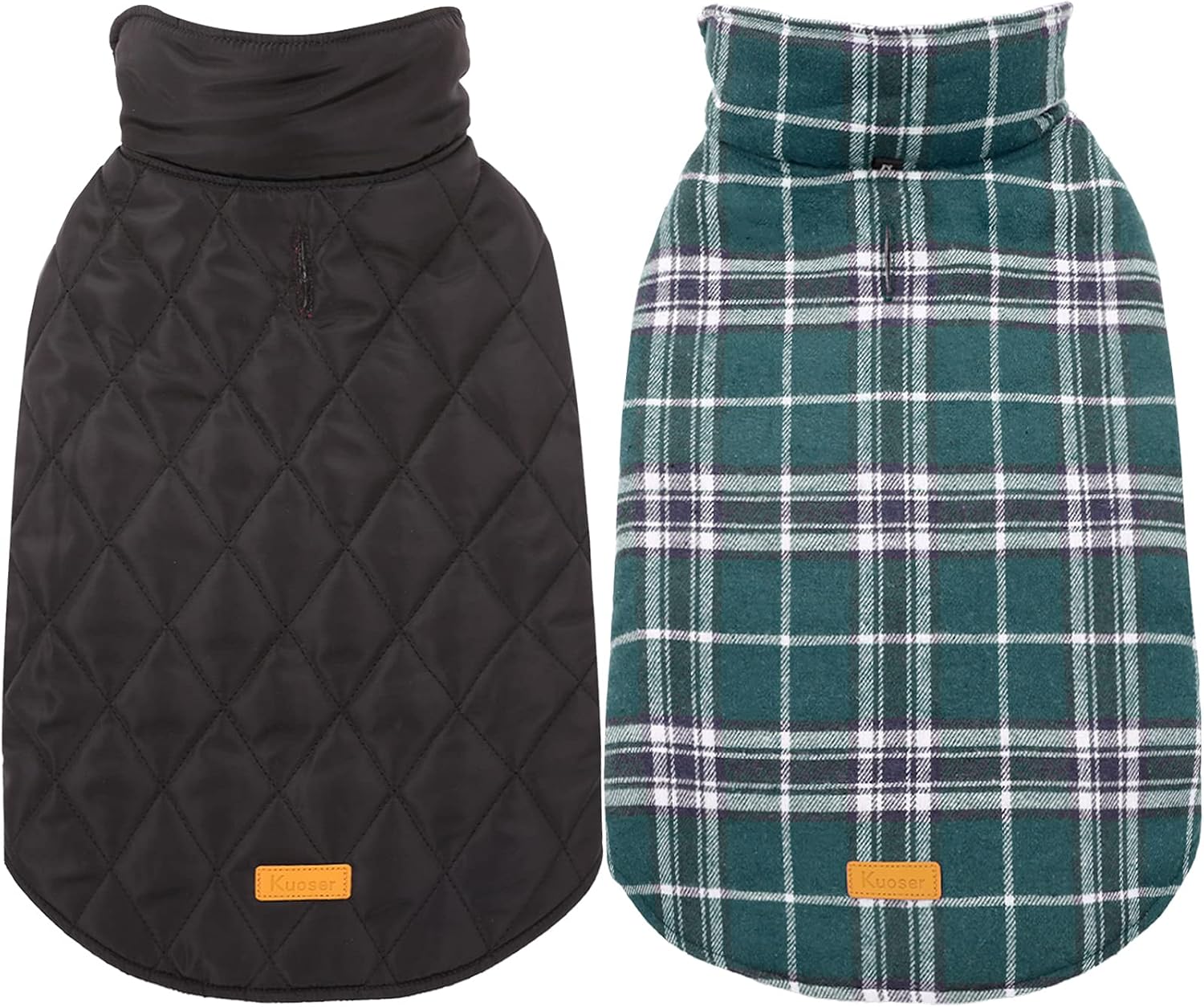
Best for: short-coated dogs on wet or windy walks who need a coat that goes on over a harness. This listing’s size picker offers X-Small, Small, Medium, Large, X-Large, 2X-Large and 3X-Large, each as a pack of 1, in many plaid colors. The listing says to measure your dog first and, if in doubt, to size up.
The listing describes windproof, waterproof polyester (the solid-colored side is the waterproof side) with a double-layer fleece lining. The coat is reversible, closes with hook-and-loop fasteners around the neck and belly, and has an elastic band at the belly. A leash hole on the upper back lets you clip a leash to a harness without taking the coat off.
Amazon’s review summary says customers find the coat well made, easy to put on and take off, and very warm, and that it fits well. While some customers say it runs big, others mention it runs small, and experiences with the hook-and-loop closures are mixed, with some reporting it coming off. Measuring first helps with both.
Fitwarm turtleneck dog sweater (heather grey)
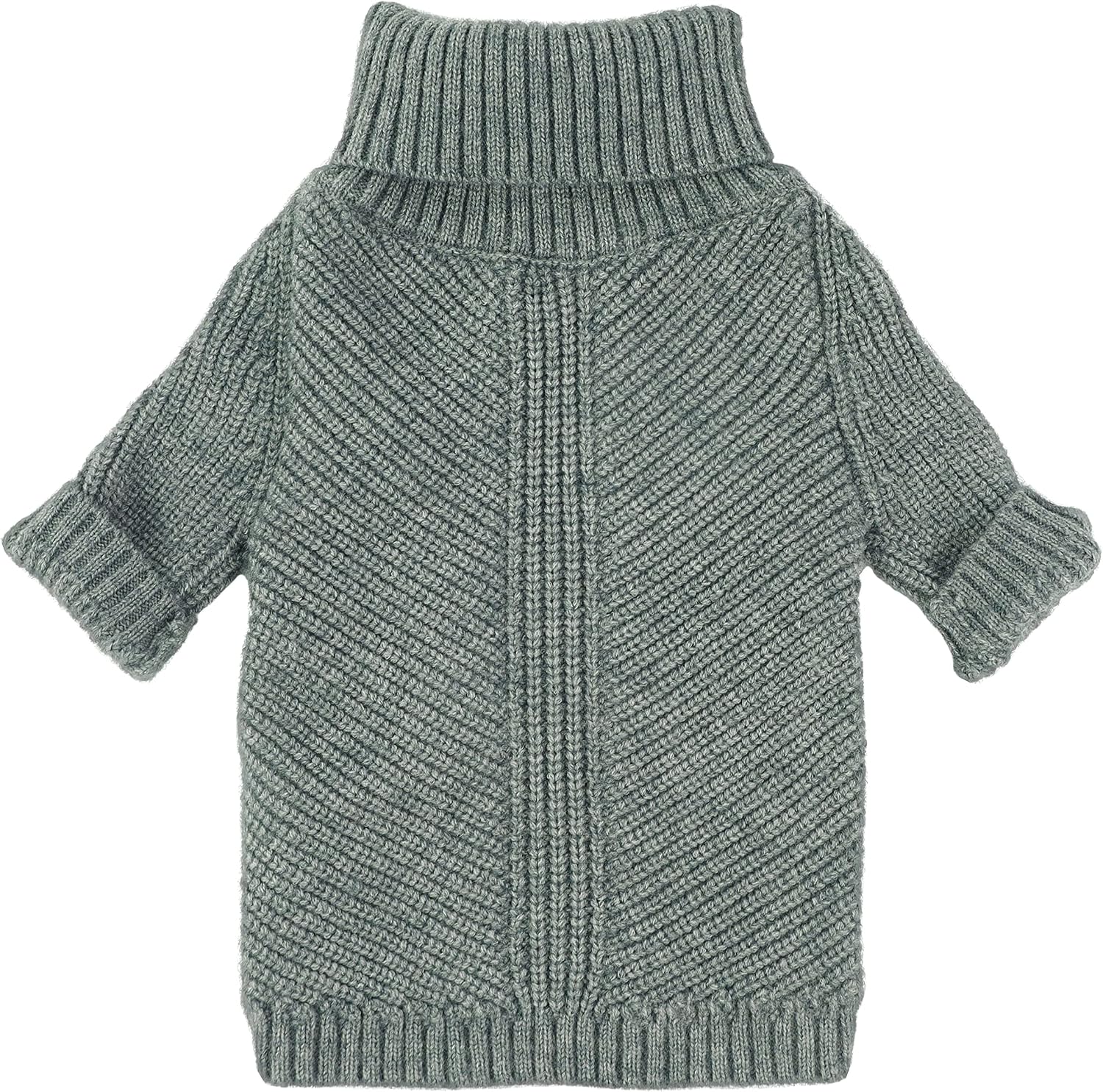
Best for: small dogs on dry, chilly days, and around the house on cold mornings. The listing is made for small dogs and says to choose by chest size first; its Medium fits a 12-inch back and a 16-inch chest. This listing’s size picker shows X-Small, Small, Medium, Large, X-Large and XX-Large, so check the chart and which sizes are in stock before you buy.
The listing describes a chunky knit turtleneck pullover made of 80% chemical fiber and 20% fleece, with a higher cut around the belly for potty breaks.
Amazon’s review summary says customers like the quality and the look, and find the sweater soft and comfortable, keeping pets warm without overheating them. Sizing gets mixed feedback, and customers mention it can be tricky to size correctly, which is why the chest measurement comes first.
Sources
- Cornell Riney Canine Health Center: Winter safety (Dr. Brian Collins, January 14, 2026)
- AKC Pet Insurance (Nell Ostermeier, DVM, Dec. 22, 2022): Does your dog need a coat?
- ASPCA: Cold weather safety tips
New pieces land in the newsletter. Subscribe on the homepage.
Related reading on ATGD
- Winter paw care for dogs, for the feet under that new coat
- Walking your dog in the dark, for short winter evenings
- More lifestyle and living guides