
After a cold walk: rinse, dry and look
City streets pick up de-icing substances such as sodium chloride (rock salt) and calcium chloride, the AKC notes, and those substances can damage paw pads. The AKC suggests keeping a bucket by the door and rinsing with warm water, reaching the spots between the toes and pads. The ASPCA’s advice is to wash and dry the feet and stomach after each walk, and not to forget a check for cracks in the pads or redness between the toes. You may also want to bring a towel on long walks to clean off stinging, irritated paws, the ASPCA says.
The AVMA adds that during a walk, a sudden lameness may be due to an injury or to ice accumulation between the toes. Check the paws frequently for signs of cold-weather injury or damage, such as cracked or bleeding paw pads.
Salt, ice melt and what dogs lick off their feet
The ASPCA warns that winter walks can become dangerous if chemicals from ice-melting agents are licked off bare paws. Its cold-weather tips, written with experts at ASPCA Poison Control, also say that ice melts can be dangerous when ingested, so keep those chemicals up and out of reach. Use pet-friendly ice melts whenever possible, the ASPCA says.
The AVMA says your dog’s feet, legs and belly may pick up de-icing products, antifreeze, or other chemicals that could be toxic, and that wiping or washing those areas when you get back inside reduces the risk that your dog will lick them off. The AVMA also suggests pet-safe de-icers on your own property.
Watch for antifreeze. The AKC says as little as a teaspoon of antifreeze can cause kidney failure, and lists drooling, vomiting, seizures, excessive thirst, panting, lethargy and a drunken appearance as signs. If you think your dog has swallowed antifreeze or another toxin, the ASPCA says to contact your veterinarian or ASPCA Poison Control at (888) 426-4435 right away.
Ice balls between the toes
Snow can turn into balls of ice between the pads. The AKC’s Anna Burke writes that those ice balls are uncomfortable, and that when a dog pulls them out they can lose hair and may swallow de-icer or road salt. Instead of pulling the ice out yourself, she says, soak a towel in warm water and massage the icy pad gently to melt and loosen the ice.
Long hair on the feet makes ice balls more likely. The AKC’s winter safety tip is to trim that hair so it is even with the surface of the foot. The AVMA says you may be able to reduce ice-ball buildup by clipping the hair between the toes. The ASPCA says that if your dog is long-haired, trim to cut down on clinging ice balls, salt crystals and de-icing chemicals, and don’t neglect the hair between the toes. If you aren’t comfortable doing that trim, the AKC suggests asking a professional.
Cracked pads, and a balm before you go out
Dry indoor air and cold outdoor air can cause paws to crack, the AKC notes, and icy conditions can also lead to cuts and scrapes, which your veterinarian can help you treat. The AKC suggests a soothing paw balm or protective paw wax to help prevent future problems. Separately, the ASPCA says to massage petroleum jelly or other vet-approved paw protectants into the pads before going outside, to help protect them from salt and chemical agents.
One wax we’d consider is below. Check the size and the current price on Amazon before you buy; we don’t list prices because they change.
Musher’s Secret paw wax (60 grams)
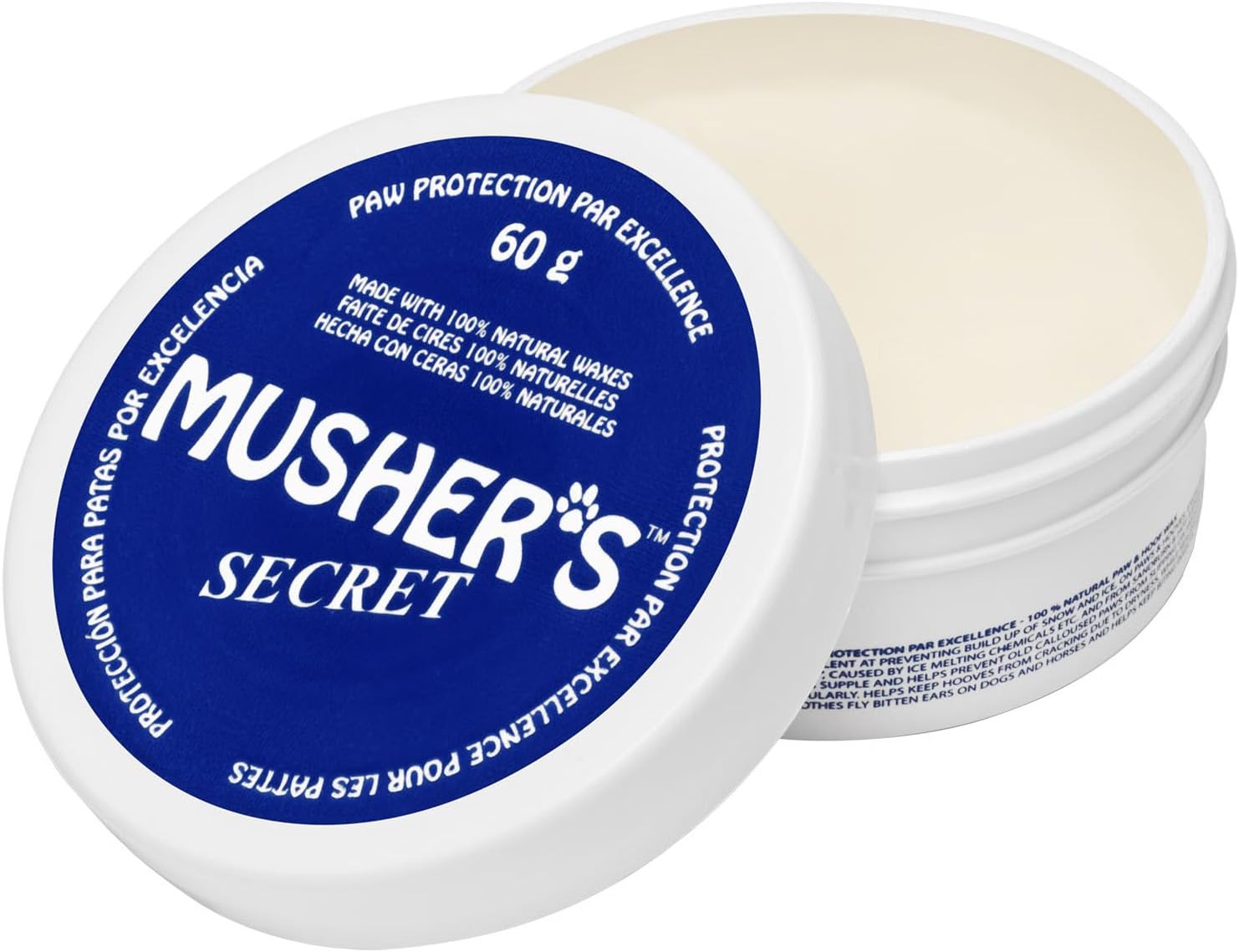
Best for: a thin layer on the pads before a winter walk, including in the spaces between the pads if snow tends to ball up there. This listing’s size picker includes 2.1 Ounce (Pack of 1) — the 60-gram tin shown here — plus 7 Ounce (Pack of 1) and 1 Pound (Pack of 1), so check the size before you buy.
The listing says this wax was created in Canada for sled dogs, and that it is a blend of food-grade natural waxes — including white and yellow beeswax, carnauba wax and candelilla wax — with vitamin E. The listing says the waxes are food-grade and are not a cause for concern if a pet licks their paws after you put it on. It tells you to apply a thin layer two to three times a week and rub it in, and to rub up between and around the pads to help prevent snowballing. Extra applications may be needed in extreme cold or heat, the listing says.
Amazon’s review summary says customers find the wax effective and easy to apply, and that it moisturizes and softens paws. While some customers report their dogs don’t lick it off, others mention it doesn’t stay on the paws.
Booties, if your dog will wear them
The ASPCA says booties can provide even more coverage than a balm and can prevent sand and salt from getting lodged between bare toes. The AKC points to sled-dog teams, whose paws are covered by booties to guard against injuries and abrasions from running on ice, and says retailers offer dog boots or paw protectors that work well to keep feet safe. The AVMA’s note is simpler: some owners use booties, and if you choose them, make sure they fit properly.
It can take patience and rewards for a dog to accept boots. If a boot is too loose it will twist or come off; if it is too tight it will rub. The listing below tells you to measure the width of the weighted paw and to pick a boot that is wider than that paw.
Ultra Paws Rugged dog boots (black, size 6)
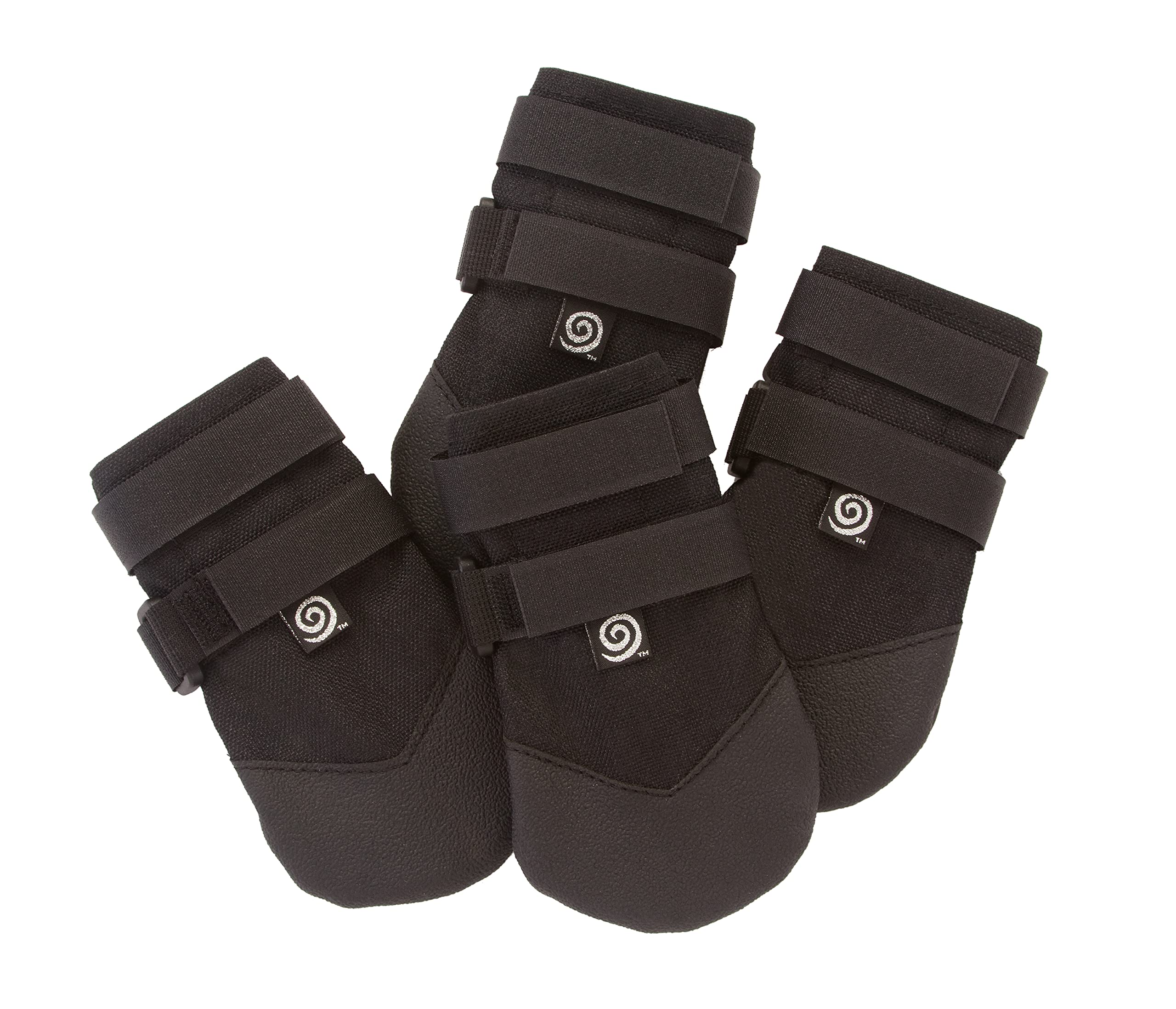
Best for: dogs who will wear boots on salty or icy walks, once you have measured for a proper fit. This listing’s size picker offers Size 6 (M) and Size 8 (L), in black or red, so check the size and color before you buy.
The listing describes water-resistant 1000-denier nylon uppers, toes wrapped in PVC, and thick skid-resistant soles made of recycled tire material, with adjustable hook-and-loop straps and foam padding. It says the boots are meant for wet, dry, hot, cold or snowy conditions, and mentions protection from concrete, gravel, snow and salt. The listing also says the product is not waterproof, but is water resistant, and that the boots can go in a cold wash.
Amazon’s review summary says customers find the boots effective on snowy sidewalks and say they protect paws from salt and ice. Fit and durability are mixed: some customers say the boots stay on and last, and others say they don’t stay on well and tend to tear at the seams. Some find them easy to put on; others say they are too hard to use. Traction is mixed, and some customers say they can be slippery on ice. Some also say they run large or too narrow, which is why the listing’s own advice is to measure first.
When to call your veterinarian
Call your veterinarian if a pad is cracked or bleeding, if your dog suddenly limps and the lameness does not ease once you have checked for ice between the toes, or if you think your dog swallowed antifreeze or ice melt. The AVMA says that if your pet is whining, shivering, seems anxious, slows down or stops moving, seems weak, or starts looking for warm places to burrow, get them back inside quickly, because those can be signs of hypothermia, and to consult your veterinarian if you suspect hypothermia or frostbite.
Sources
- AKC: How to keep your dog warm and safe this winter (AKC Staff, updated January 14, 2026)
- AKC: How to clean and care for your dog’s paws (Anna Burke, updated March 18, 2026)
- ASPCA: Cold weather safety tips
- AVMA: Cold weather animal safety
New pieces land in the newsletter. Subscribe on the homepage.
Related reading on ATGD
- Senior dog mobility at home, since good traction matters most for older dogs
- More health and safety guides